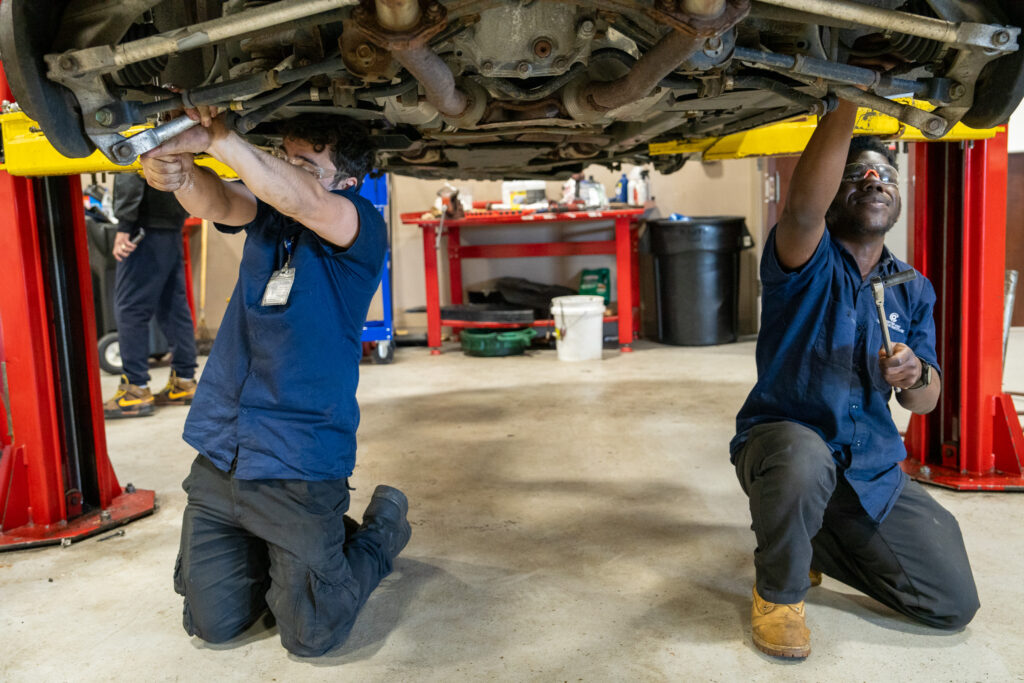
Automotive Technician vs. Mechanic: What’s the Difference?
Choosing between an automotive technician and an auto mechanic usually comes down to the type of problem your vehicle has. Both work in automotive repair, both understand cars and trucks, and both may perform hands-on service, but their focus, tools, and training can differ. This guide explains the practical difference, when each term is used, and how drivers in the United States can choose the right professional for maintenance, diagnostics, and repairs.
What is the difference between an automotive technician and a mechanic?
An automotive technician typically focuses on diagnosing, testing, and repairing modern vehicle systems, especially those involving electronics, sensors, software, and computerized controls. A mechanic is often associated with hands-on repair of mechanical parts such as brakes, engines, transmissions, belts, hoses, and suspension components. In everyday conversation, the terms overlap, and many repair shops use them interchangeably.
The difference is less about one role being “better” and more about emphasis. Modern vehicles are rolling networks of mechanical systems, electrical circuits, onboard computers, safety technology, emissions controls, and driver-assist features. Because of that, the person repairing your vehicle may need both traditional mechanical skill and advanced diagnostic ability.
In many U.S. repair shops, an experienced professional may be called a mechanic by customers, a technician by the employer, and a service professional by the industry. The job title matters less than the person’s ability to inspect the vehicle properly, explain the issue clearly, and complete the repair safely.
The traditional role of an auto mechanic
The word “mechanic” has been used for generations to describe someone who repairs vehicles. Traditionally, an auto mechanic worked heavily with physical components: removing worn parts, adjusting systems, replacing fluids, rebuilding assemblies, and solving problems through inspection, experience, and practical skill.
That work is still essential. Even the most advanced vehicle still depends on tires, brakes, steering, cooling, lubrication, belts, bearings, and other mechanical parts. A mechanic’s value often shows up when a vehicle has a noise, vibration, leak, starting issue, overheating problem, or drivability concern that requires hands-on investigation.
Common mechanic-focused work includes:
- Brake service: replacing pads, rotors, calipers, brake fluid, or related hardware.
- Engine repair: addressing leaks, misfires, worn components, overheating, or timing-related concerns.
- Suspension and steering work: replacing shocks, struts, control arms, tie rods, ball joints, or bushings.
- Fluid and filter maintenance: changing oil, coolant, transmission fluid, brake fluid, air filters, and cabin filters.
- Exhaust and cooling repairs: fixing mufflers, pipes, radiators, water pumps, thermostats, and hoses.
A skilled mechanic is often excellent at recognizing patterns. For example, a certain clunk over bumps may suggest worn sway bar links, while uneven tire wear may point toward an alignment or suspension issue. That kind of experience remains extremely valuable in automotive repair.
The modern role of an automotive technician
An automotive technician usually works with both the physical vehicle and the digital systems that control it. Today’s vehicles use computers to manage fuel delivery, ignition timing, transmission shifting, emissions systems, anti-lock brakes, airbags, stability control, climate control, infotainment, and many other functions.
That means a technician may begin a repair with a scan tool, wiring diagram, service information system, or diagnostic procedure rather than a wrench. The goal is not just to replace a part, but to confirm what failed, why it failed, and whether the repair actually solves the problem.
Automotive technicians often handle tasks such as:
- Reading and interpreting diagnostic trouble codes.
- Testing sensors, modules, relays, circuits, and connectors.
- Performing drivability diagnostics for hesitation, stalling, rough idle, or poor fuel economy.
- Calibrating or servicing advanced safety and driver-assist systems.
- Updating, programming, or relearning vehicle modules when required.
- Diagnosing hybrid, electric, and high-voltage vehicle systems when trained to do so.
A trouble code is a starting point, not a final answer. For instance, an oxygen sensor code does not always mean the oxygen sensor is bad. The actual issue could involve an exhaust leak, wiring fault, fuel mixture problem, vacuum leak, or engine performance concern. A technician’s job is to test before replacing parts whenever possible.
Why the distinction matters for drivers
The distinction matters because choosing the right repair approach can save time, money, and frustration. If your vehicle needs straightforward maintenance, a qualified mechanic may be exactly who you need. If the concern involves warning lights, intermittent electrical problems, emissions readiness, or complex drivability symptoms, diagnostic skill becomes especially important.
Drivers sometimes ask for a specific repair because a code reader, parts store scan, or online forum suggested a part. That can be risky. Modern automotive repair is often less about guessing the bad component and more about following evidence. A professional who understands diagnostics can help prevent unnecessary part replacement.
Here are situations where the technician skill set is especially useful:
- The check engine light is on. The vehicle needs code retrieval, freeze-frame data review, testing, and confirmation.
- The problem comes and goes. Intermittent faults may require road testing, live data analysis, or circuit checks.
- Multiple warning lights appear at once. One underlying issue can trigger several systems.
- The vehicle recently had a battery, module, or sensor replaced. Relearns, programming, or calibration may be needed.
- The car has hybrid, electric, or advanced driver-assistance features. Specialized safety procedures and equipment may apply.
That said, mechanical experience still matters. A technician who can read data but cannot verify a physical failure may miss the real-world cause. The best automotive professionals combine both skill sets.
Certifications, training, and shop experience
In the United States, automotive professionals may build skills through trade schools, community colleges, dealership training, independent shop apprenticeships, manufacturer programs, or military experience. Some also pursue ASE certifications, which are widely recognized in the industry. Certification alone does not guarantee a perfect repair, but it can show that a professional has tested knowledge in specific areas.
Training paths vary because the automotive field is broad. One person may specialize in diesel engines, another in European vehicles, another in transmissions, and another in electrical diagnostics. Dealership technicians may receive brand-specific training for certain makes, while independent repair technicians may develop broad experience across many brands and model years.
When comparing an automotive technician vs mechanic, it helps to think in terms of capability rather than title. Ask whether the shop has experience with your type of vehicle and concern. A well-run shop should be able to explain its diagnostic process, provide estimates, and communicate what is urgent versus what can be monitored.
Useful indicators of professionalism include:
- Clear written estimates before major work begins.
- A willingness to explain findings in plain language.
- Diagnostic procedures instead of automatic part replacement.
- Warranty information on parts and labor when applicable.
- Proper equipment for the vehicle’s systems.
- Documentation of recommended repairs and maintenance.
How do you choose the right professional for your vehicle?
Choose based on the problem you need solved, the complexity of your vehicle, and the shop’s ability to diagnose and communicate. For routine maintenance or obvious mechanical repairs, a qualified auto mechanic or general repair shop may be a good fit. For warning lights, electrical issues, hybrid systems, or advanced safety features, look for a technician or shop with strong diagnostic equipment and relevant experience.
Start by describing the symptom clearly. Instead of saying, “I need a new alternator,” explain that the battery light is on, the car was slow to start, or the headlights dim at idle. That gives the professional room to test the charging system, battery, cables, and related circuits before recommending a repair.
Use this checklist before scheduling service:
- Identify the symptom: noise, leak, warning light, vibration, odor, poor performance, or no-start condition.
- Note when it happens: cold start, highway speed, braking, turning, idling, accelerating, or after rain.
- Gather vehicle details: year, make, model, mileage, engine type, and recent repair history.
- Ask about diagnostics: confirm whether testing is included, separate, or credited toward the repair.
- Request findings: ask what failed, how it was confirmed, and what happens if the repair is delayed.
- Compare value, not just price: the cheapest quote may not include the same parts, testing, warranty, or labor quality.
For newer vehicles, it is also worth asking whether the shop has access to current service information. Repair procedures can involve torque specifications, reset steps, calibration requirements, or software-related instructions. Skipping those details can create new problems even when the right part is installed.
Common misconceptions about mechanics and technicians
Many drivers assume a technician only uses computers and a mechanic only uses tools. In reality, professional automotive work usually requires both. A scan tool can point toward a system, but a person still has to interpret the data, inspect the vehicle, perform tests, and make a repair.
Another misconception is that dealership service departments always use technicians while independent shops only use mechanics. The reality is more mixed. Many independent shops employ highly skilled diagnostic technicians, and many dealership employees perform mechanical repairs every day. The shop’s training, equipment, workflow, and honesty matter more than the sign outside.
Some drivers also believe that a code scan is the same as a diagnosis. It is not. A free or basic scan may identify stored codes, but diagnosis often requires additional testing. Paying for diagnostic time can feel frustrating, but it is often what prevents guesswork and repeat visits.
The skills that matter most in modern automotive repair
Modern automotive repair rewards a balanced skill set. Vehicles have become more complex, but they still operate through real mechanical forces: compression, friction, heat, pressure, voltage, fuel, and airflow. A strong professional understands both the physical and electronic sides of the vehicle.
Key skills include:
- Mechanical judgment: knowing how parts wear, fail, sound, and behave under load.
- Electrical understanding: testing voltage, resistance, grounds, circuits, and communication networks.
- Diagnostic discipline: proving the cause before recommending expensive repairs.
- Tool knowledge: using lifts, scan tools, meters, scopes, alignment equipment, and specialty tools correctly.
- Safety awareness: following procedures for airbags, high-voltage systems, fuel systems, and lifting points.
- Communication: explaining technical issues in a way drivers can understand and act on.
The communication piece is easy to overlook. A good repair professional should help you understand whether a repair affects safety, reliability, emissions, comfort, or convenience. That helps you prioritize work if everything cannot be done at once.
What the terminology means for careers in the auto industry
For people considering a career, the technician label often reflects where the industry is headed. Employers increasingly need workers who can diagnose networked systems, use digital service information, and adapt as vehicles change. Mechanical skill is still foundational, but technical literacy is becoming more important every year.
Entry-level workers may start with maintenance, tires, inspections, oil changes, and basic repairs. Over time, they may move into brakes, suspension, engine performance, electrical diagnostics, drivability, air conditioning, diesel, hybrid systems, or brand-specific specialties. The path depends on training, mentorship, tools, and the types of vehicles serviced.
If you are searching job listings, you may see “automotive technician,” “auto mechanic,” “service technician,” “lube technician,” “diagnostic technician,” or “master technician.” Read the responsibilities closely. One shop may use “mechanic” for an advanced repair role, while another may use “technician” for an entry-level position.
The bottom line for vehicle owners
The automotive technician vs mechanic difference is real, but it is not absolute. A mechanic is commonly associated with hands-on vehicle repair, while an automotive technician is often associated with diagnostics, electronics, and modern vehicle systems. In practice, the best professionals blend both.
For drivers, the smartest move is to match the professional to the problem. Routine service, brakes, tires, and visible mechanical issues may not require advanced diagnostics. Warning lights, electrical faults, intermittent symptoms, and newer vehicle technologies often do. When a shop tests carefully, explains clearly, and repairs confidently, the title matters much less than the quality of the work.
Build Your Foundation at PCI
For 80 years, Porter and Chester Institute has helped students develop technical and professional skills through career-focused education and hands-on training.
PCI offers automotive technology program with availability varying by campus.
Your career is an investment in your future. Before choosing a path based on price alone, consider where and how you want to build the knowledge, skills and hands-on experience that can help you move forward.
Ready to get started? Explore healthcare training at Porter and Chester Institute.
Learn Today. Lead Tomorrow.