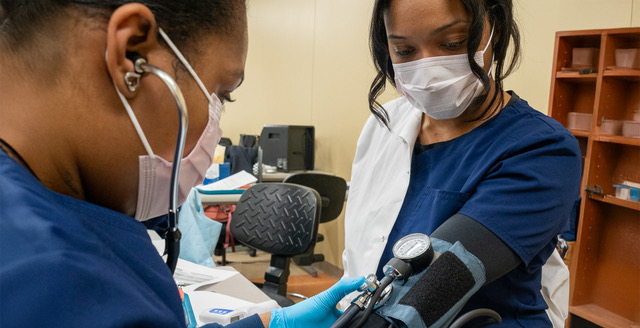
Certified Medical Assistant: Start Your Career Guide
How to Become a Certified Medical Assistant?
A certified medical assistant supports patient care and clinic operations by combining clinical skills, administrative accuracy, and professional communication. To start a medical assistant career, you typically choose an eligible training path, prepare for a national certification exam, pass the exam, and keep your credential current. This guide walks through the process in practical steps so you can move from research to application with fewer surprises.
What does a certified medical assistant need to do?
A certified medical assistant needs to meet the eligibility rules for a recognized credential, complete any required education or experience, pass the certification exam, and follow renewal requirements. Medical assistants often handle both clinical and administrative duties, and the U.S. Bureau of Labor Statistics notes that many complete a postsecondary certificate, diploma, or associate degree program; some employers may also require Basic Life Support certification. (bls.gov)
Certification is not the same thing as a school certificate. A school may award a certificate or diploma when you finish a program, while a professional credential is awarded by a certifying organization after you meet its requirements and pass its exam. Before enrolling anywhere, check which certification your target employers prefer.
Choose the right certification path before you enroll
The most common medical assistant certification options include CMA (AAMA), RMA (AMT), and CCMA (NHA). Each has its own eligibility rules, so the “best” option depends on your education, work history, state expectations, and employer preferences. The CMA (AAMA) exam, for example, is tied to specific postsecondary medical assisting program or apprenticeship requirements, while AMT lists multiple RMA eligibility routes and documentation requirements. (aama-ntl.org)
Before you commit to a program, compare:
- Eligibility: Does the program or experience route qualify you for the exam you want?
- Accreditation: Is the medical assisting program recognized by the certifier you plan to use?
- Externship access: Will you get supervised clinical practice in a real healthcare setting?
- Scheduling: Can you complete classes, labs, and clinical hours around work or family obligations?
- Employer preference: Do clinics, hospitals, and specialty practices in your area mention CMA, RMA, or CCMA in job postings?
If you are new to healthcare, an accredited or otherwise exam-eligible training program is usually the clearest route. If you already work as a medical assistant, an experience-based route may be possible through some certifiers, but you must verify the current rules directly with that organization.
Follow these steps to become certified
1. Research local job requirements
Start by reviewing medical assistant job postings in your area. Look for repeated credential names, required skills, and preferred experience. This helps you avoid choosing a program that sounds convenient but does not match local hiring expectations.
Pay attention to whether employers ask for phlebotomy, injections, EKGs, electronic health records, bilingual communication, or front-office experience. These details show what your training should prepare you to do. If most postings request a specific credential, make that credential your planning target.
2. Select an eligible medical assisting program
Choose a program only after confirming it supports your intended certification exam. CAAHEP provides a searchable list of currently accredited programs or programs holding a Letter of Review, and ABHES also maintains a directory of accredited institutions and programs. (caahep.org)
Ask the admissions team direct questions before enrolling:
- Which certification exams are graduates eligible to take?
- Is the medical assisting program accredited, and by whom?
- Does the curriculum include hands-on clinical labs?
- Is an externship included or required?
- What documents will you receive after graduation?
- Does the school help students apply for certification exams?
Get answers in writing when possible. Certification eligibility often depends on exact program status, completion date, and documentation, so vague promises are not enough.
3. Complete your coursework and clinical practice
During training, build both your clinical and administrative skills. A well-rounded medical assistant may need to understand patient intake, vital signs, infection control, specimen handling, medication support, appointment scheduling, insurance basics, and medical records. Your scope of work can vary by state, employer, and supervising provider, so treat school as your foundation rather than the end of learning.
Use labs and externships seriously. Practice professional habits such as verifying patient identity, documenting carefully, asking for clarification, and protecting privacy. These behaviors matter on certification exams, but they matter even more when you begin working with patients.
4. Gather your exam documents early
Do not wait until the week before graduation to organize paperwork. Certifying organizations may ask for transcripts, proof of program completion, employer verification, identification, or other documents. Missing paperwork can delay your exam date even if you are academically ready.
Create a folder for:
- Program acceptance and completion records
- Unofficial and official transcript instructions
- Externship completion confirmation
- CPR or BLS card, if required by your employer or program
- Government-issued ID details that match your exam application
- Certifier emails, login information, and payment confirmations
If your name has changed or your documents use different versions of your name, resolve that before applying. Small mismatches can create avoidable delays.
5. Apply for the certification exam
Once you meet eligibility requirements, complete the application through the certifying organization. Read the candidate handbook or application instructions carefully, because deadlines, testing windows, fees, rescheduling rules, and identification requirements can differ by organization.
For CMA (AAMA), the AAMA directs candidates to determine eligibility, prepare, and read the exam application before applying. NHA’s CCMA page points candidates to its handbook for eligibility details and exam rules. (aama-ntl.org)
After you apply, schedule your exam for a date that gives you enough focused review time. Avoid choosing a date so far away that you lose momentum or so soon that you rush through weak areas.
6. Prepare with the exam outline
Use the official exam outline or candidate materials from your certifier as your main study map. Review anatomy, medical terminology, infection control, patient care procedures, pharmacology basics, administrative processes, legal and ethical responsibilities, and communication skills.
A practical study plan should include:
- Short daily review sessions instead of one long cram session
- Practice questions with explanations
- Flashcards for terminology, abbreviations, and normal ranges
- Skills review for procedures you learned in lab or externship
- Extra time for the topics you consistently miss
Study like you are preparing for real clinic decisions, not just multiple-choice questions. When you understand why an answer is safe, ethical, and clinically appropriate, you are more likely to remember it under pressure.
7. Pass the exam and use your credential correctly
On exam day, arrive early or log in ahead of time if testing online. Bring the required identification, follow testing rules, and pace yourself. After passing, follow the certifier’s instructions for receiving your credential and sharing verification with employers.
Use the credential name exactly as the certifying organization allows. For example, AAMA states that only people who have been certified by passing the CMA (AAMA) Certification Exam and maintaining currency may use the CMA (AAMA) designation. (aama-ntl.org)
8. Apply for medical assistant jobs
Update your resume with your credential, externship site, clinical skills, administrative systems, and patient care experience. If you are new to the field, highlight dependable attendance, professionalism, privacy awareness, and hands-on training.
For interviews, prepare examples from labs or externship that show how you handled patients, followed instructions, corrected mistakes, or stayed calm in a busy setting. A medical assistant career depends on trust as much as technical ability.
How do you keep your certification active?
You keep certification active by following your certifier’s renewal rules, which may include continuing education, fees, deadlines, or retesting if a credential expires. AAMA notes that if a CMA (AAMA) credential has been expired for more than three months, the person is no longer eligible to recertify by continuing education and must sit for the exam again. (aama-ntl.org)
Set calendar reminders well before your renewal deadline. Save continuing education certificates as you earn them, not after you need them. Staying current protects the value of your credential and shows employers that you take the profession seriously.
Build a steady start in healthcare
Becoming a certified medical assistant is a manageable goal when you choose the credential first, confirm eligibility, complete the right training, and prepare with official exam materials. The process takes planning, but each step builds toward a practical healthcare role with patient contact and administrative responsibility. Start by comparing local job postings and certification requirements, then choose the program or eligibility route that supports the medical assistant career you want.
Build Your Foundation at PCI
For 80 years, Porter and Chester Institute has helped students develop technical and professional skills through career-focused education and hands-on training.
PCI offers healthcare training in areas such as Practical Nursing, Medical Assisting and Dental Assisting, with program availability varying by campus.
Your career is an investment in your future. Before choosing a path based on price alone, consider where and how you want to build the knowledge, skills and hands-on experience that can help you move forward.
Ready to get started? Explore healthcare training at Porter and Chester Institute.
Learn Today. Lead Tomorrow.tions. Visit schools. Look carefully at costs.
Then choose the path that makes sense for your future.
Build Your Foundation at PCI
For 80 years, Porter and Chester Institute has helped students develop technical and professional skills through career-focused education and hands-on training.
PCI offers career training in areas such as automotive technology, healthcare, skilled trades and computers, with specific program availability varying by campus.
Your career is an investment in your future. Before choosing an educational path based on price, length or what everyone else is doing, consider where and how you want to develop the skills and experience that can help you move forward.
Ready to explore your options? Learn more about career training at Porter and Chester Institute.
www.pci.edu
Learn Today. Lead Tomorrow.