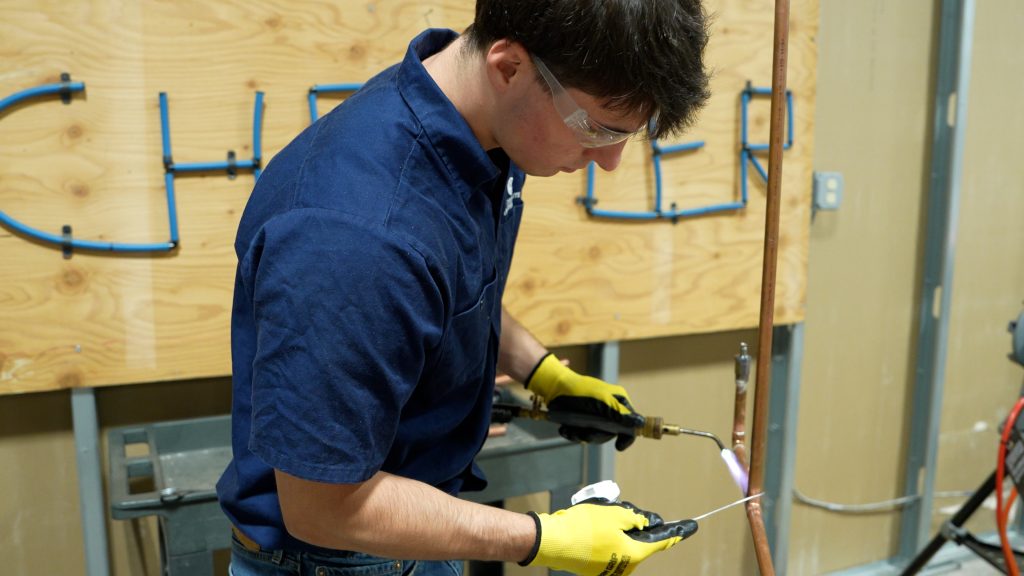
Is Trade School Right for You? Discover Job Skills & Career Paths
What is a trade school and is it right for you?
A trade school is a career-focused training option built around practical job skills, hands-on learning, and a faster path toward employment in skilled fields. Instead of spending most of your time on broad academic coursework, you focus on the tools, techniques, safety practices, and workplace expectations connected to a specific career path. If you want training that connects directly to workforce development and real job preparation, exploring trade school programs can be a smart next step.
Is trade school right for you?
Trade school may be right for you if you want a more direct route into a career, prefer learning by doing, or need training that fits a clear employment goal. It is often a strong fit for people who know they want practical skills in fields such as healthcare support, construction, electrical work, automotive technology, welding, culinary work, cosmetology, HVAC, information technology, or other hands-on careers.
It may also be a good option if a traditional four-year college path does not match your timeline, budget, learning style, or career interests. The right choice depends on your goals, the program quality, the credential offered, local employer demand, and how well the training prepares you for the work you actually want to do.
You may be a strong candidate for trade school if you want to:
- Build job skills you can apply in a specific occupation
- Train for work that often requires technical ability or certification
- Spend more time in labs, shops, clinics, or simulated work environments
- Prepare for entry-level employment, apprenticeship, licensure, or advancement
- Learn from instructors who understand the expectations of the field
- Choose a focused program instead of a broad general education path
- A practical path into skilled careers
Trade school is designed around career readiness. Classes are usually connected to the tasks, equipment, procedures, and standards used in a particular industry, so the learning experience feels practical from the start. For many students, that structure makes training easier to connect to a real future job.
A strong program does more than teach isolated techniques. It helps you understand how to work safely, communicate on the job, follow instructions, solve problems, and meet employer expectations. Those habits matter because workforce development is not only about filling open positions; it is about preparing people to contribute with confidence and competence.
For example, a student interested in HVAC may not only study heating and cooling systems in theory. They may practice diagnostics, learn tool use, review safety procedures, understand customer service expectations, and prepare for credentials that employers may recognize. That combination of technical and workplace preparation is what makes trade school different from simply reading about a career.
What you can expect from a trade school program
Every program is different, so it is important to review the details before enrolling. Still, many trade school experiences share a few common elements that help students move from interest to readiness.
Look for programs that include:
- Focused coursework: Classes should connect directly to the trade or career area, with limited unrelated requirements.
- Hands-on practice: Quality training usually includes labs, equipment, demonstrations, supervised practice, or real-world scenarios.
- Clear credential outcomes: The program should explain whether it leads to a certificate, diploma, associate degree, exam preparation, apprenticeship readiness, or another credential.
- Career support: Helpful services may include resume guidance, interview preparation, employer connections, job search support, or externship placement.
- Safety and professional standards: Strong programs teach the habits, rules, and responsibilities expected in the workplace.
- Transparent requirements: You should be able to understand program length, costs, supplies, attendance rules, prerequisites, and completion expectations before you commit.
The best program is not always the fastest or the most familiar name. It is the one that fits your career goal, teaches relevant job skills, and gives you a realistic understanding of what comes after training.
Trade school compared with other education options
Trade school is not better than college for everyone, and college is not better than trade school for everyone. They serve different goals. A four-year degree may be the right route for careers that require broad academic study, advanced research, or specific professional credentials. A trade school may be a better match when your goal is to enter a skilled occupation with focused, practical training.
Community colleges, apprenticeships, online certificates, employer training programs, and military training can also lead to valuable careers. The key is to compare options based on the job you want, not based on assumptions about which path sounds more traditional.
Before choosing, ask yourself:
- What specific job or field am I trying to enter?
- What credential, license, or experience do employers in that field expect?
- Does the program teach the skills used in that job?
- How much time can I commit to training each week?
- What support is available if I need help with career planning?
- What are the total costs, including tools, materials, exams, and transportation?
- What are my options after completion if I want to keep advancing?
These questions help you move beyond the simple idea of “school” and toward a decision based on your future work.
Signs of a program worth considering
A good trade school should make its value clear without pressure or vague promises. You should be able to see what you will learn, how training is delivered, what support is available, and how the program connects to employment pathways.
Pay attention to whether the program explains outcomes in plain language. If a course prepares students for an exam, the school should say which exam. If a field requires licensure, the school should explain how its training relates to that requirement. If tools, uniforms, background checks, physical demands, or clinical hours are involved, those details should be easy to find.
Use this checklist as you compare programs:
- The curriculum matches the occupation you want
- Instructors or training staff can explain what students practice and why
- Facilities, tools, or learning platforms support realistic skill-building
- Admissions staff answer questions clearly and do not rush your decision
- Costs and financial obligations are explained before enrollment
- Career services are described with specific types of support
- The schedule fits your work, family, or transportation needs
- Completion requirements are realistic for your current situation
A program does not need to be perfect to be valuable, but it should be honest, clear, and aligned with your career goal.
Build job skills with a plan
Choosing trade school is a career decision, not just an education decision. Start by naming the type of work you want to do, then work backward to identify the training, credentials, and experience that can help you get there. This approach keeps your search focused and helps you avoid choosing a program simply because it sounds interesting.
If you are still unsure, that is normal. Many people begin with a general interest in hands-on work, healthcare, technology, mechanical systems, beauty, food service, or construction and then narrow their options as they learn what each career involves. The important step is to ask direct questions and compare programs based on real requirements.
A simple planning process can help:
- Choose two or three careers that interest you.
- Review what daily work looks like in each field.
- Identify required training, credentials, or licenses.
- Compare trade school programs that prepare students for those expectations.
- Talk with an admissions or career advisor before enrolling.
- Make a decision based on fit, clarity, support, and career direction.
- Take the next step toward career training
If you want education that is practical, focused, and connected to the workplace, trade school is worth exploring. The right program can help you build job skills, prepare for employer expectations, and move toward a skilled career with a clearer plan.
Start by reviewing available programs, asking what each one includes, and matching your choice to the work you want to do. When you are ready, request program information or speak with an advisor to compare options and decide whether trade school is the right next step for you.
Build Your Foundation at PCI
For 80 years, Porter and Chester Institute has helped students develop technical and professional skills through career-focused education and hands-on training.
PCI offers skilled trades training in areas such as Electrical, HVACR, Plumbing, Welding and Low Voltage Technology, with program availability varying by campus.
Your career is an investment in your future. Before choosing a path based on price alone, consider where and how you want to build the skills that can help you move forward.
Ready to get started? Explore skilled trades training at Porter and Chester Institute. www.pci.edu
Learn Today. Lead Tomorrow